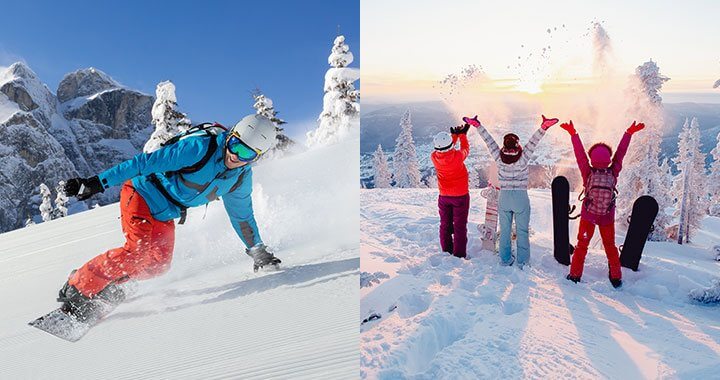
Skiing in Honshu: Tokyo, Hakuba, Nozawa Onsen, Shiga Kogen, Myoko Kogen and Naeba — and what our team found out in 2026
Japan has a way of getting under your skin. You go once and you spend the next year telling anyone who will listen about the food, the snow, the trains that run on time, and the particular kind of calm that comes from being somewhere that just works. We know this because we have seen it happen to our clients, and if we are being honest, to ourselves too.
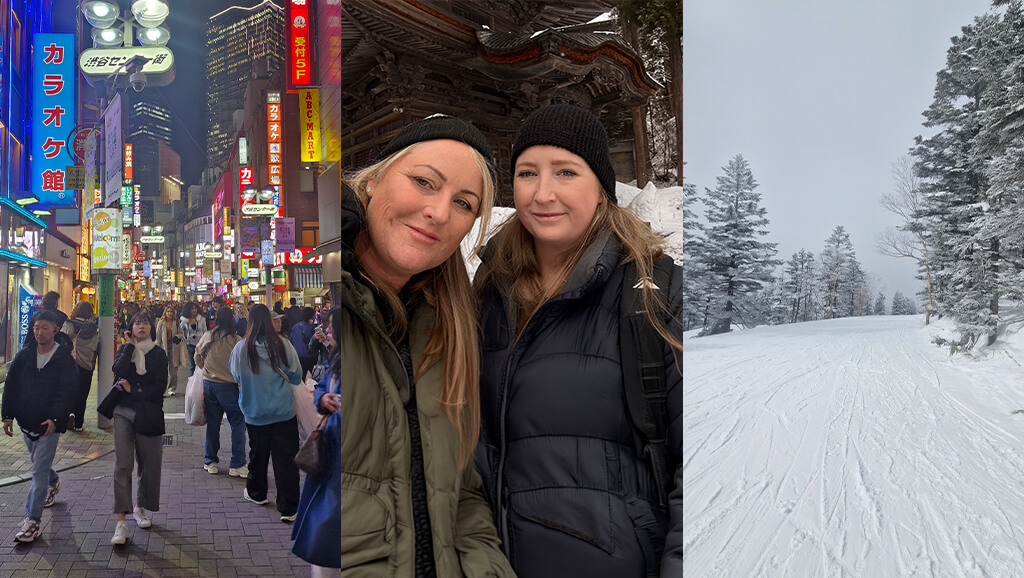
So when the opportunity came up to put boots on the ground across Honshu’s key ski destinations, Tokyo as the gateway, then Hakuba, Nozawa Onsen, Shiga Kogen and Myoko Kogen, we went. Not to tick boxes, but to build the kind of first-hand knowledge that actually makes a difference when we are helping you plan the trip. Multiple team members, multiple resorts, a lot of ramen, and enough collective intel to give confident advice on where to stay, what to ski, and how to make the most of every destination on the island.
Here is what we found.
Getting there: Air New Zealand all the way
The journey starts well before you hit the slopes. Jaimee and Laura flew Air New Zealand in economy, and the verdict was overwhelmingly positive. Check-in and bag drop at Auckland was quick and painless – no queuing around the terminal, no kerfuffle. The aircraft itself was comfortable with a generous amount of space for economy class, the entertainment worked as it should, the meals were good, and the crew were the kind of warm and attentive that makes a long-haul flight feel a lot shorter than it is.
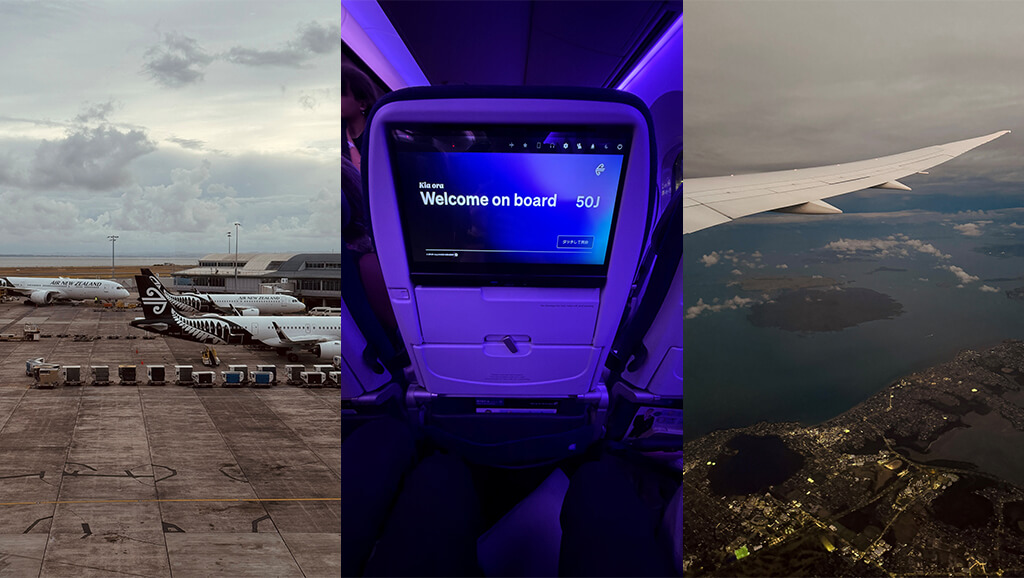
Landing into Tokyo Narita, customs and immigration moved quickly and the whole process from landing to baggage claim took around 20 to 30 minutes. A refreshingly smooth arrival into one of the world’s busiest cities.
Tokyo: a night in Shinjuku
The team landed and headeed straight to Shinjuku, and it does not ease you in gently. Tokyo’s most electric district hits you all at once – towering neon signs stacked ten stories high, rivers of people moving in every direction, the smell of yakitori drifting from narrow alleys, and a pace that feels kinetic even by Tokyo standards. It is one of those places that is almost impossible to describe to someone who hasn’t stood in the middle of it.
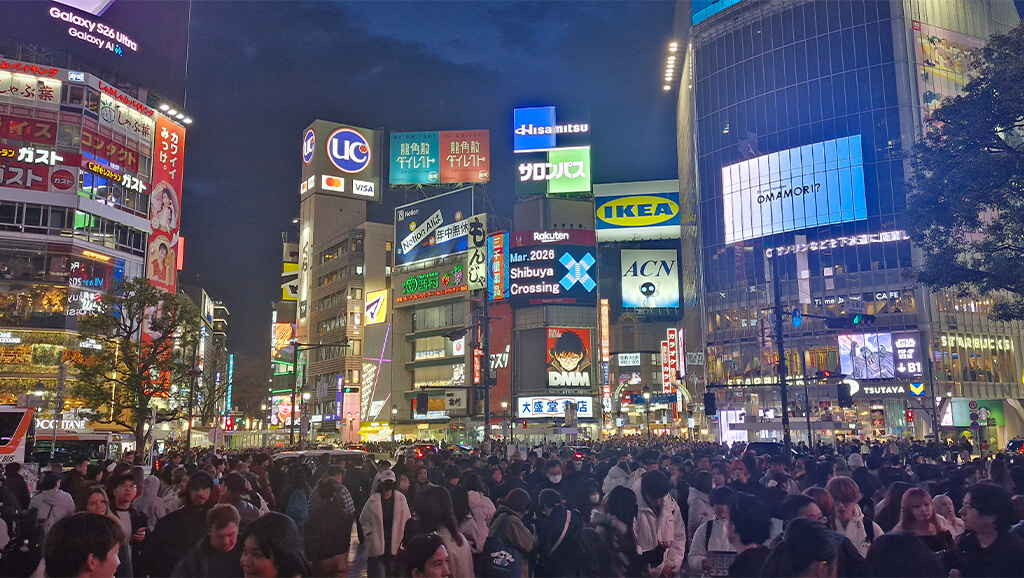
One night is just enough to get a taste – and a taste is exactly what it is designed to be. Dinner options in Shinjuku and nearby Shibuya are exceptional and genuinely accessible. A bowl of proper ramen will set you back ten to fifteen dollars, while those who want to step things up can find outstanding wagyu and barbecue restaurants nearby. The city rewards wandering, and the train network makes getting around a breeze.
One practical note worth knowing: a lot of cafes in Tokyo open later than you might expect. The local solution is Family Mart or 7-Eleven, both of which are genuinely excellent for a quick breakfast or snack – far better than the convenience store equivalents back home.
Hakuba: scale, variety and the valley’s best-kept secrets, by Laura & Jaimee
From Tokyo, the transfer to Hakuba is straightforward. The Nagano Snow Shuttle departs from just outside Nagano Station, easy to find, with helpful staff, and a smooth swap to a smaller bus at Hakuba JR Station gets you the rest of the way. The whole process is comfortable and well-organised.
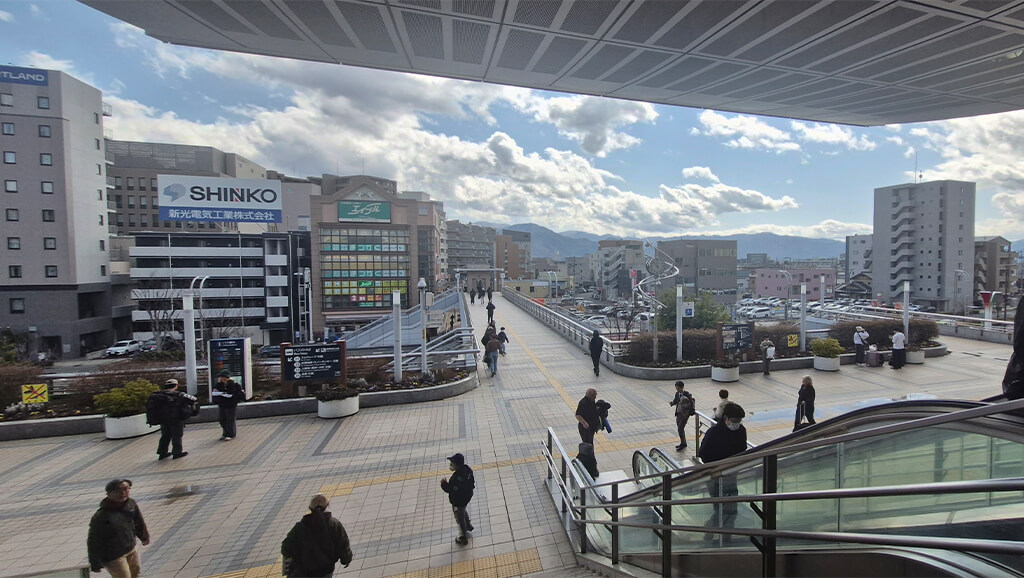
The first thing to know about Hakuba is that it is big. Not just in terms of terrain, the valley itself is spread out, with distinct ski areas, villages and accommodation options dotted across a wide area. A rental car (a Kei car works well given the narrow roads) is highly recommended for anyone wanting to move between areas at their own pace, and we have car rental partners to make it go easy. Happo Village can feel a little disorienting at first, but you get your bearings quickly. Buses are available and free with a lift ticket, though they run on set schedules, some only once in the morning and afternoon, so a bit of planning ahead pays off.
In terms of where to base yourself, each area has a different character. Happo is the heart of it all and the best choice for those who want to be close to restaurants and the general buzz of the valley. Upper Happo is excellent for lift access and suits those who are happy to self-cater. Sakka is the pick for families and learners, with a good ski school and gentler terrain, though dining options are more limited there. Tsugaike is excellent for beginners and intermediates, the terrain is well suited to building confidence, and while it is lighter on restaurants and bars, the bus connection makes it easy enough to access.
On the slope side, Happo One skews intermediate to advanced and is best appreciated by confident skiers. Tsugaike is the standout for those still building their skiing legs. On this trip, the team visited and reviewe 14 properties across the valley, covering a range of accommodation styles and locations to give a solid spread of first-hand knowledge.
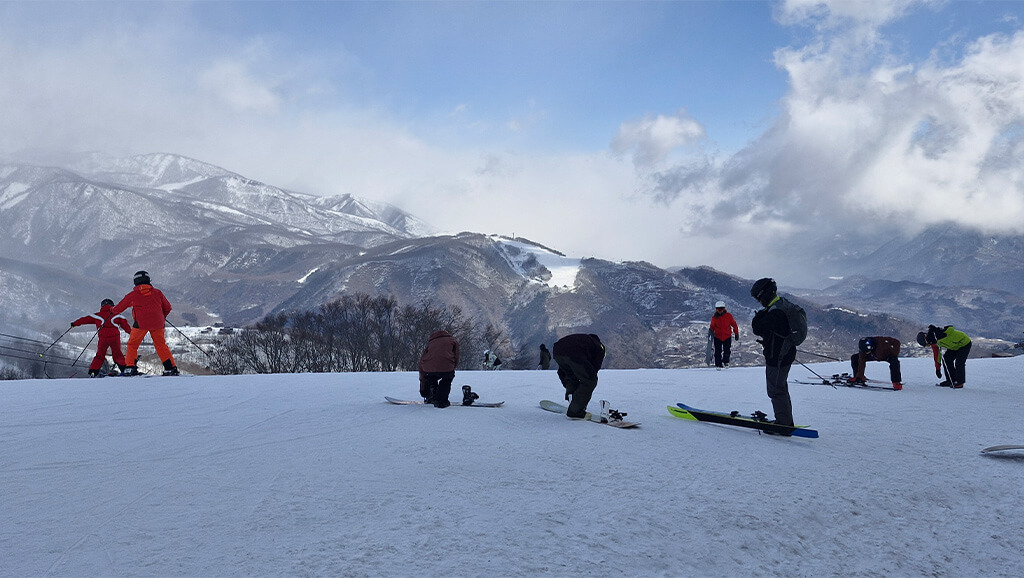
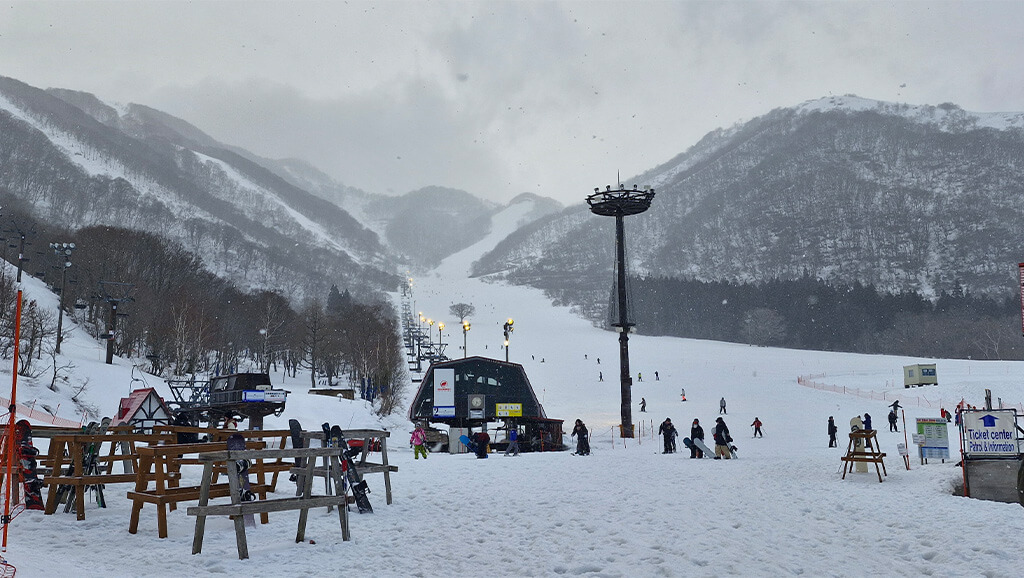
One highlight worth calling out: our ski gear rental partner was a fantastic experience. Knowledgeable staff, quality equipment, and a door-to-door service. They picked the team up from accommodation, sorted everything at the shop, dropped them back with gear in hand, and collected it all at the end of the stay. It is the kind of seamless experience that makes a real difference on a ski holiday.
Nozawa Onsen: village atmosphere done properly
The transfer from Hakuba to Nozawa Onsen comes with an unexpected highlight. The route stops at the Oyaki Dumpling Factory, free tasting included, where you can watch these incredible dumplings being made by hand. It is a small thing, but it sets the tone for what Nozawa is all about: a place that takes its traditions seriously and makes no apologies for it.
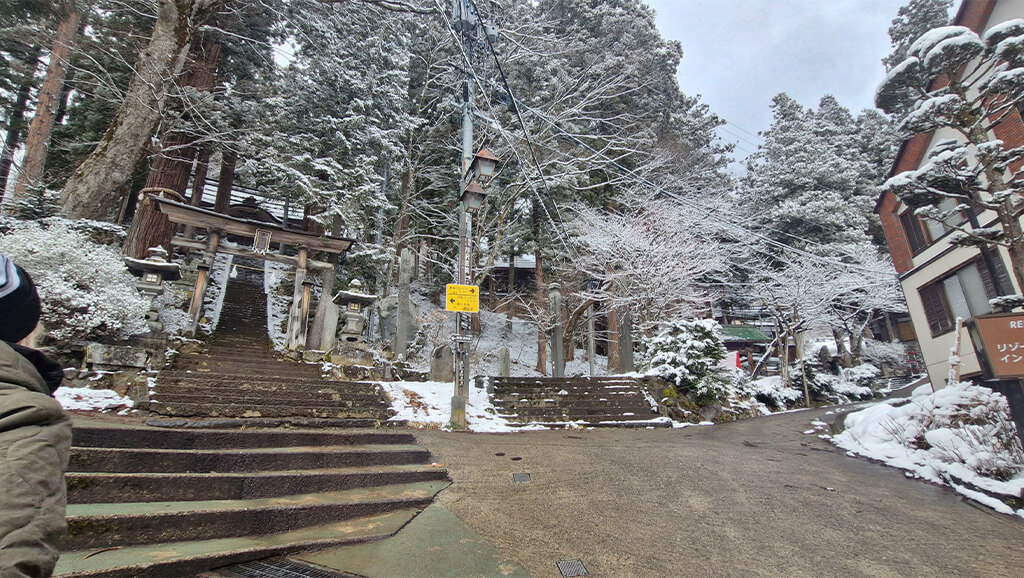
The village itself is beyond charming. Compact and walkable, with a great spread of eateries and stores, and public onsens seemingly on every corner. At night the atmosphere really comes into its own, there is a warmth and energy here that feels authentic rather than manufactured. A few practical notes worth passing on: there are only two ATM locations in the village, both closing at 8pm, so arriving with adequate cash is advisable.
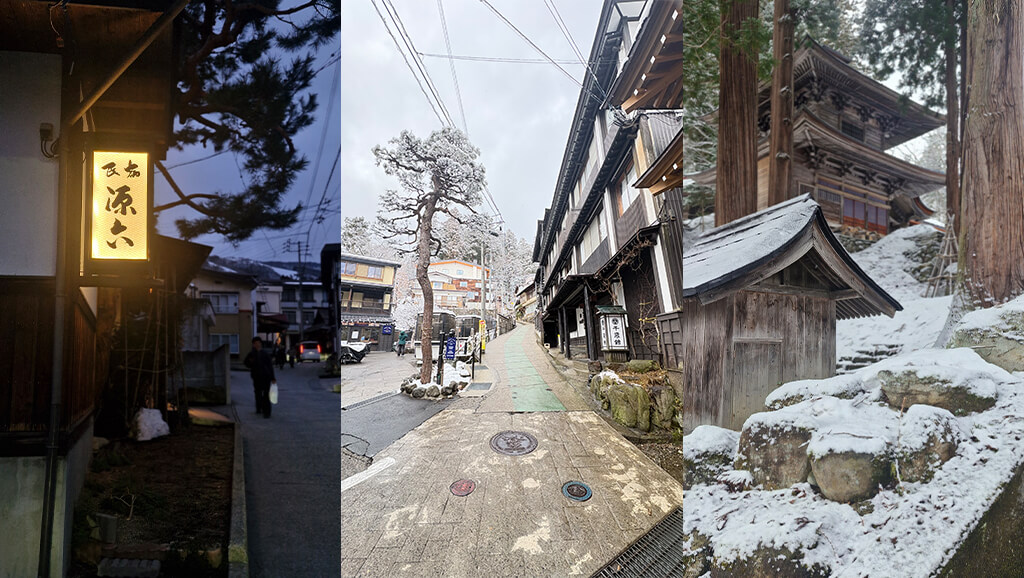
The slopes are excellent across the board. Green runs are trully enjoyable rather than merely functional, the red runs offer good challenge (a few are on the steeper side, worth flagging for clients), and the learner area at the base, right beside the rental shops and restaurants, is among the best our team has encountered anywhere in Japan. On this trip, the team visited and reviewed 9 properties here, across a range of positions and price points within the village.
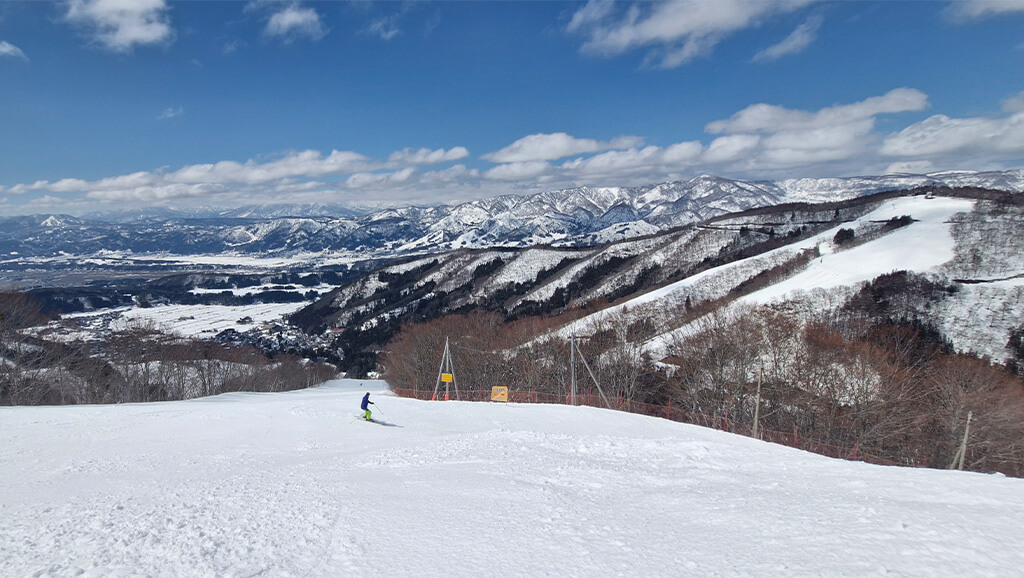
Lift passes are collected via voucher exchange at the ticket window, a simple process. Just remember to bring ID.
Shiga Kogen: Japan’s largest ski area
The scale of Shiga Kogen takes a moment to properly land. Eighteen interconnected resorts spread across a vast highland plateau in Nagano Prefecture, the same mountains that hosted the 1998 Winter Olympics. The terrain is enormous and the variety is genuinely staggering.
Jaimee and Laura were quick to single out Yakebitaiyama as a particular highlight. The blue runs there are fantastic with wide, well-groomed, and reminiscent of what you would find in North America in the best possible way. Easy access to each gondola and the Ichinose area makes navigation straightforward once you get your bearings, which the free Nagaden Bus helps with considerably. The Prince Hotels also run their own free shuttle in the evenings, which is a handy touch after a long day on the mountain.
The resort spreads across several distinct areas, each with its own character. Yakebitaiyama and the Okushiga area are quieter and more peaceful, while Ichinose has more life around it, with a few more eateries and shops, a busier atmosphere. Both have their appeal depending on what kind of day you are after.
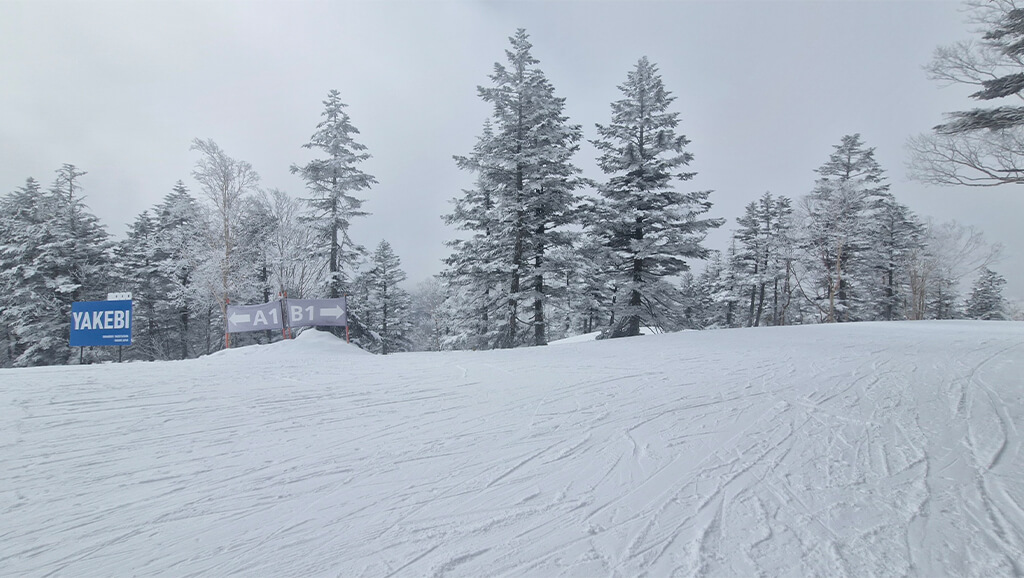
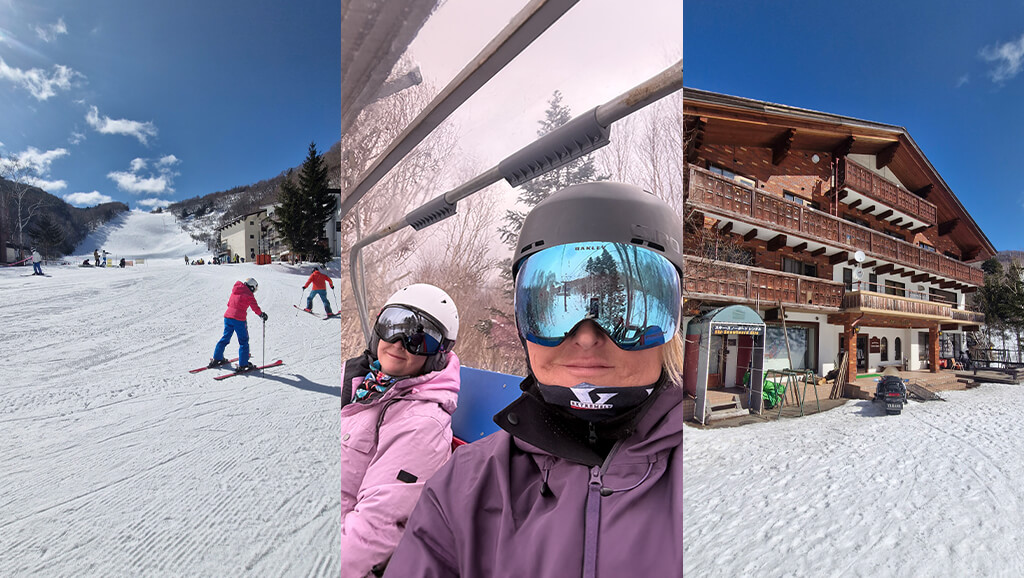
On the food side, the Shiga Prince East main dining hall is the standout, formal dining with a buffet breakfast offering both Japanese and Western options, and a dinner service with buffet starters and dessert alongside two or three main dish choices. For something more relaxed mid-mountain, Bar and Restaurant Rocky at Hotel Ichinose is great for lunch. There is also a burger bar in the gondola building at the East, an izakaya in the gondola building at the South, and a ramen bar and Chinese restaurant next to the West, so you are never far from something good.
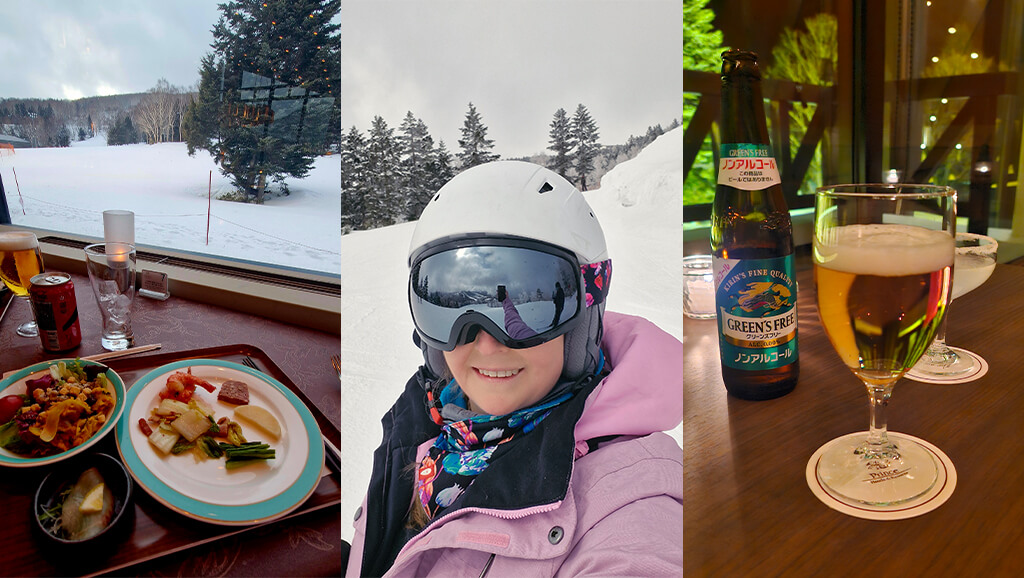
On this trip, the team visited and reviewe 7 properties across Shiga Kogen, spread across the different areas to give a genuine picture of the options at each end of the plateau.
Myoko Kogen: powder reputation, authentic soul
The transfer from Shiga Kogen to Myoko Kogen by private taxi is easy and efficient. One thing to note about Japanese drivers: they tend to arrive early and are ready to leave straight away, so being on time, or slightly ahead of schedule, is the done thing.
Myoko Kogen sits in Niigata Prefecture and carries one of the most respected powder reputations in Japan, and on a good day, is the kind of light, dry powder that genuinely floats. The area regularly receives over 15 metres of annual snowfall.
The resort is made up of several distinct ski areas spread across the valley, similar in feel and vibe to Nozawa Onsen but on a smaller and more intimate scale. It has a working-village character, with plenty of locals and a traditional Japanese atmosphere that feels genuinely lived-in rather than purpose-built. Accommodation options sit within a short walk of the lifts, and many offer complimentary shuttles on top of that.
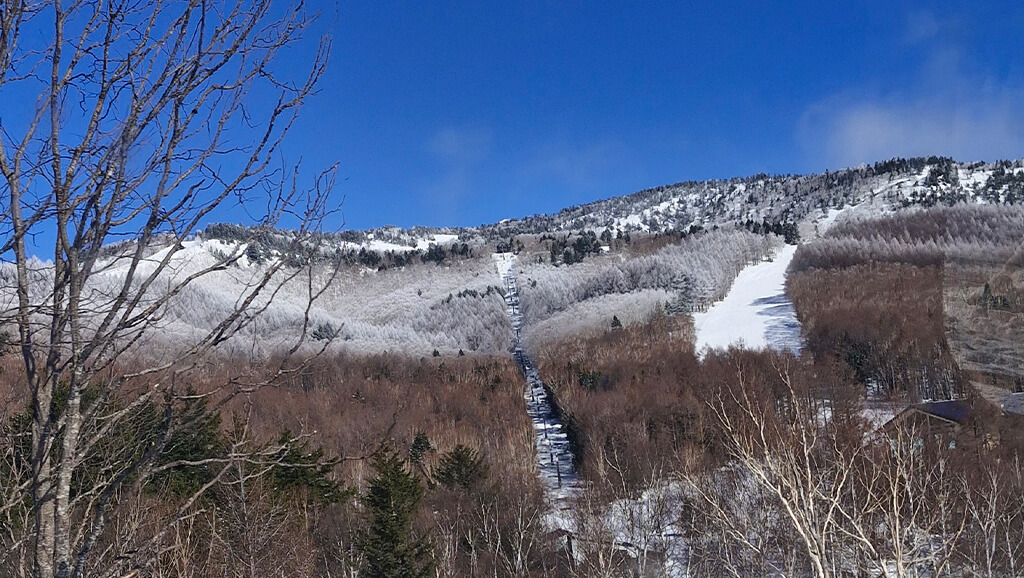
The terrain covers a wide range of abilities. Suginohara features a longest run of around 8.5 kilometres, with roughly 80% of its courses suited to beginner and intermediate levels, making it excellent for clients who want mileage and confidence-building without feeling intimidated. At the other end of the spectrum, Akakura Onsen hosts the steepest run in central Japan, and the sidecountry across the resort is plentiful, with ski patrol policy relatively relaxed for those who stay in bounds. For freestyle skiers and boarders, the terrain parks are well-maintained and genuinely impressive in number, with both Akakura resorts offering parks for all levels and Suginohara’s Sugi Park a particular standout.
On this trip, the team visited and reviewe 10 properties across Myoko Kogen. Worth noting that the resort areas are not fully interconnected, so some movement between them requires transfers or a vehicle, similar to Hakuba but on a more manageable scale.
So is it worth it?
Between Tokyo, Hakuba, Nozawa Onsen, Shiga Kogen, Myoko Kogen and Naeba the team came back with full notes, excellent photos, and a very clear answer: yes. The resorts are brilliant in different ways, Hakuba for scale and variety, Nozawa for village soul, Shiga Kogen for sheer terrain, Myoko for powder and authenticity, and Naeba for a self-contained mountain experience with everything on the doorstep. The food is outstanding wherever you go, the logistics work, and Japan’s particular quality, things done thoughtfully and it shows, holds true across all of it.
We went and did the research so that when you arrive, everything is already figured out. All you need to do is show up, clip in, and enjoy it.
If Honshu sounds like your kind of ski trip, get in touch. We would love to plan this for you.